
🕒 VERB TENSES REVIEW
En inglés hay muchos tiempos verbales, y no todos se usan igual ni con la misma frecuencia. A veces da la sensación de que hay que dominarlos todos para “hablar bien”, pero no funciona así. Lo importante no es memorizar listas, sino entender qué quiere expresar cada forma verbal y por qué se usa en un contexto concreto.
Hay hechos curiosos que diferencian los tiempos verbales españoles de los ingleses. Uno de ellos sería que el inglés no tiene subjuntivo como el español. No existen formas distintas para quiera, tuviera, fuera… como en nuestra lengua. En su lugar, el inglés usa otras estrategias: verbos auxiliares, estructuras fijas o cambios de orden. Por tanto, no podemos pretender que TODO lo que leemos en inglés tenga una correspondencia exacta en español. Esto explica por qué algunas frases inglesas parecen “raras” cuando intentamos traducirlas palabra por palabra.
📌 Mapa visual: aquí tienes un resumen de tiempos verbales para tenerlo como referencia durante la unidad (no es para memorizarlo todo de golpe).

Guarda esta imagen como “chuleta” y vuelve a ella cuando te surjan dudas. Iremos por partes: presente → pasado → futuro, con ejemplos reales y práctica.
🟢 LOS TIEMPOS DE PRESENTE
Comenzamos este repaso de los tiempos verbales con los tiempos de presente. Son los más utilizados en el día a día, así que si estos cuatro están claros, puedes comunicarte en muchísimas situaciones reales.
1️⃣ Present Simple

Estructura básica
👉 Sujeto + verbo (forma base)
👉 Sujeto + -s (3ª persona singular)
Ejemplos
-
I work in the morning.
-
She works in a hospital.
Uso principal
-
Rutinas
-
Hábitos
-
Hechos generales
-
Cosas que “siempre” o “normalmente” pasan
-
✍️ Actividad: completa con el verbo correcto.
- I usually ______ (work) in the morning.
- She ______ (live) in Morón.
- We ______ (have) coffee every day.
He ______ (play) football on Saturdays.
-
They ______ (watch) TV in the evening.
-
My brother ______ (study) English at the CEPER.
-
We ______ (go) to class by bus.
-
She ______ (teach) maths in the afternoon.
-
I ______ (listen) to music while I cook.
-
People ______ (need) time to learn a language.
✅ Answer key · Present Simple
- I usually work in the morning.
- She lives in Morón.
- We have coffee every day.
- He plays football on Saturdays.
- They watch TV in the evening.
- My brother studies English at the CEPER.
- We go to class by bus.
- She teaches maths in the afternoon.
- I listen to music while I cook.
- People need time to learn a language.
2️⃣ Present Continuous
Se usa para hablar de cosas que están pasando ahora mismo, situaciones temporales o cosas que ocurren estos días.
Estructura básica
👉 Sujeto + am / is / are + verbo -ing
Ejemplos
- I am studying English now.
- She is working this week.
Uso principal
- Acciones en este momento
- Situaciones temporales
- “Ahora”, “estos días”
✍️ Actividad: completa con la forma correcta.
- I ______ (study) English now.
- She ______ (work) this week.
- We ______ (have) a break at the moment.
- They ______ (watch) TV right now.
- He ______ (learn) to use the computer.
- I ______ (cook) dinner right now.
- She ______ (study) for the exam today.
- We ______ (use) the computer at the moment.
- They ______ (listen) to the teacher now.
- He ______ (work) on the project this afternoon.
✅ Answer key · Present Continuous
- I am studying English now.
- She is working this week.
- We are having a break at the moment.
- They are watching TV right now.
- He is learning to use the computer.
- I am cooking dinner right now.
- She is studying for the exam today.
- We are using the computer at the moment.
- They are listening to the teacher now.
- He is working on the project this afternoon.
Te dejo un vídeo que seguro que te ayuda para aclararte aún más:
Superb! Vamos hacer un kahoot en el que tendrás que decidir si las frases van en Presente Simple o Continuo:
Y aquí tenéis una ficha para practicar el uso de estos dos verbos:

3️⃣ Present Perfect
Se usa para hablar de experiencias, acciones pasadas sin decir cuándo y cosas que tienen relación con ahora.
Estructura básica
👉 Sujeto + have / has + participio pasado
Ejemplos
- I have visited Seville.
- She has finished the exercise.
Uso principal
- Experiencias de la vida
- Acciones recientes
- Pasado conectado con el presente
✍️ Actividad: completa con la forma correcta.
- I ______ (finish) my homework.
- She ______ (be) to Seville twice.
- We ______ (never / try) sushi.
- He ______ (lose) his keys.
- They ______ (learn) a lot this year.
- I ______ (see) that film before.
- She ______ (already / finish) the exercise.
- We ______ (never / visit) Madrid.
- He ______ (break) his glasses.
- They ______ (just / arrive) home.
✅ Answer key · Present Perfect
- I have finished my homework.
- She has been to Seville twice.
- We have never tried sushi.
- He has lost his keys.
- They have learned a lot this year.
- I have seen that film before.
- She has already finished the exercise.
- We have never visited Madrid.
- He has broken his glasses.
- They have just arrived home.
Te dejo un vídeo que seguro que te ayuda para aclararte aún más:
4️⃣ Present Perfect Continuous
Se usa para hablar de acciones que empezaron en el pasado y continúan ahora, o cuando importa cuánto tiempo.
Estructura básica
👉 Sujeto + have / has been + verbo -ing
Ejemplos
- I have been studying for two hours.
- She has been working all morning.
Uso principal
- Acciones largas o repetidas
- Enfatizar duración
- Resultados visibles ahora
✍️ Actividad: completa con la forma correcta.
- I ______ ______ (study) English for two years.
- She ______ ______ (work) here since January.
- We ______ ______ (wait) for the bus for a long time.
- He ______ ______ (learn) a lot lately.
- They ______ ______ (practice) pronunciation all week.
- I ______ ______ (study) all morning.
- She ______ ______ (clean) the house for hours.
- We ______ ______ (practice) English lately.
- He ______ ______ (use) the app every day.
- They ______ ______ (wait) since eight o’clock.
✅ Answer key · Present Perfect Continuous
- I have been studying English for two years.
- She has been working here since January.
- We have been waiting for the bus for a long time.
- He has been learning a lot lately.
- They have been practicing pronunciation all week.
- I have been studying all morning.
- She has been cleaning the house for hours.
- We have been practicing English lately.
- He has been using the app every day.
- They have been waiting since eight o’clock.
📝 Review games
Aquí tienes unos juegos para practicar en clase:
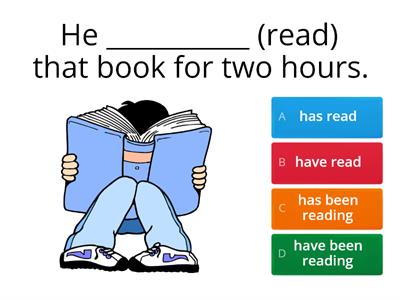

Y aquí tienes dos Kahoot:
🤔 Present perfect simple o continuous
Después de trabajar bastante el present perfect simple y el present perfect continuous, aún nos quedan algunas dudas, porque las dos formas a veces significan casi lo mismo, pero cambian según qué queremos destacar en la frase. Vamos a simplificarlo mucho, a ver si nos queda más claro así:
Present perfect simple
Se usa cuando queremos hablar del resultado o de la
cantidad.
I have written five emails.
She has read three books this month.
Present perfect continuous
Se usa cuando queremos hablar del tiempo o de la
duración de una acción.
I have been writing emails for two hours.
She has been reading all afternoon.
Además, el present perfect continuous normalmente no se usa con verbos de estado como:
know, want, need, like, love
Por ejemplo:
I have known her for years. ✅
I have been knowing her for years. ❌
Present perfect simple → resultado o cantidad.
Present perfect continuous → duración o proceso.
Ahora vamos a ver este vídeo, que lo explica de forma muy clara con ejemplos.
Practiquemos un poco el listening. En este vídeo veremos los usos y diferencias de los dos tiempos verbales. Es un quiz show, así que afina el oído, que está todo en inglés:
¿Un poco más claro? Practiquemos ahora con estas fichas:


Y por último, toca jugar un poco con este BOARD GAME:


